Bookworm: July 2026
'True Biz,' 'Tehrangeles,' 'In the Unlikely Event,' 'The Giver,' 'A Brief History of the World in 47 Borders'
This post contains an affiliate link or links. If you use a link to buy a book, I may earn a small commission. You can find all the books that have been featured in this newsletter in my Bookshop store.
If you’re a regular reader of this Substack, you know I have an inordinate fondness for literary side quests. This summer I’m going for a blackout on a Book Bingo card from the neighborhood bookstore. I’ve got eight squares left, out of 25, which bodes well for meeting the Labor Day deadline. (And Labor Day is late this year, falling on Sept. 7 — an extra week of reading time!)
Have you taken on any reading projects this summer?
Table of contents
Young adult fiction: “True Biz,” by Sara Novic
Fiction: “Tehrangeles,” by Porochista Khakpour
Historical fiction: “In the Unlikely Event,” by Judy Blume
Children’s science fiction: “The Giver,” by Lois Lowry
History: “A Brief History of the World in 47 Borders: Surprising Stories Behind the Lines on Our Maps,” by Jonn Elledge
“True Biz”

July is Disability Pride Month, a good reminder to consider the world from the perspective of people who don’t navigate it the same way I do. This year’s Disability Pride Month coincided with a square on the Book Bingo card that says, “A book with a deaf or hard of hearing character.” I found glowing reviews for a young adult novel, “True Biz,” by author, educator and deaf rights activist Sara Novic.
“True Biz,” an American Sign Language phrase that translates roughly to “real talk,” is set at a residential school for the deaf. It revolves around three key characters: February, the school’s headmistress, a hearing child of deaf adults; Austin, a longtime student from a multi-generational Deaf family; and Charlie, a new transfer student with a checkered school record. Despite very different personal lives, they find common ground when the district threatens the school’s very existence.
This book taught me a great deal about Deaf culture and American Sign Language, and did so without ever becoming preachy or resorting to exposition. By the time I was done, I wanted everyone to read it.
“Tehrangeles”
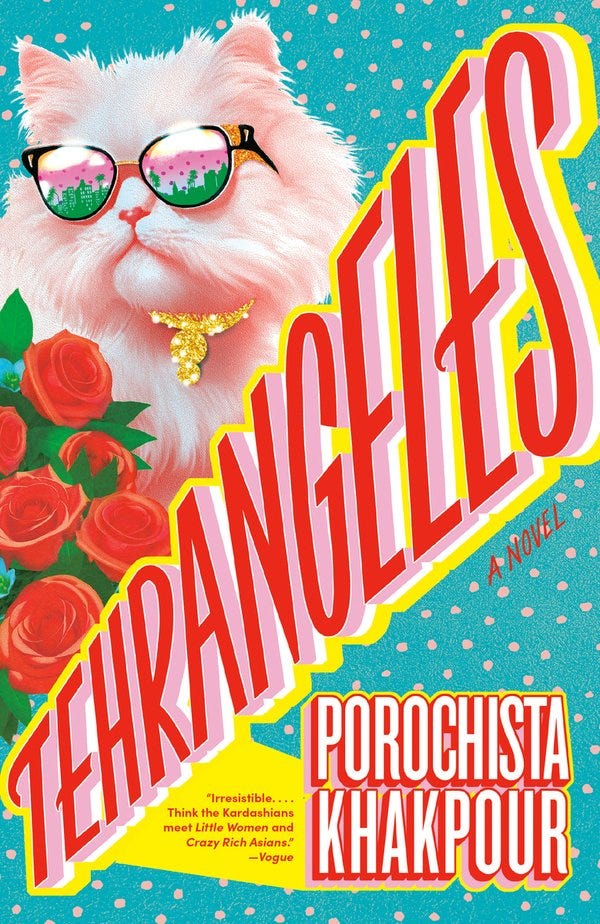
The Book Bingo card also has a square for a book by an Iranian author, so I picked up Porochista Khakpour’s satirical novel “Tehrangeles,” about four young Iranian American sisters having a group coming-of-age moment in 2020. Call it “Little Women” meets the pandemic, L.A.-style.
Ali Milani’s daughters are Southern California princesses, thanks to a microwaveable frozen snack called Pizzabomme that he invented. The family is in talks with a producer about doing their own version of “Keeping Up with the Kardashians” until something called the novel coronavirus enters the frame.
Locked down in their mansion, the sisters each cope in their own ways. Violet, a model, eats her feelings. Roxanna, a social media influencer, decides to throw the ultimate party in an act of defiance. Mina, the homebody, tries out new and different online personas. Hayley, the youngest, takes a hard right turn into Covid denial.
Unlike the March sisters in “Little Women,” the Milani sisters don’t have suitors to swoop in and lift them into new lives. Nor are their parents the paragons of piety and wisdom that Mr. and Mrs. March were. They must each navigate the pandemic themselves as best as they can — hopefully in style.
“In the Unlikely Event”
I’ve been slowly making my way through Judy Blume’s backlist, and this year-round side quest led me to “In the Unlikely Event.”
Before Blume was a mega-bestselling author and arguably the voice of multiple generations of teens, she grew up in Elizabeth, N.J. In the winter of 1951-52, that city turned into ground zero for a trio of deadly aviation accidents, all tied to nearby Newark Airport. Blume’s 2015 novel revisits the crashes through the eyes of 15-year-old Miri Ammerman, her single mother and their family, friends and neighbors. With each accident, bodies pile up, as do suspicions about what’s causing the crashes: Aliens? Communists?
I’d describe “In the Unlikely Event” as a slice-of-life novel, but what a slice. Miri and other Elizabeth residents learn to cherish life and help one another make the most of it. We also get glimpses of some of those who board the doomed planes, living their lives fully right up to their last moments.
“The Giver”
Fran Gardner, a former colleague who writes the Becoming Substack newsletter, recently shared the first 16 titles from a list of top children’s books. I had read every one except Lois Lowry’s “The Giver.” All I knew about it was that it’s a Newbery Medal winner that often shows up on lists of banned books.
Turns out “The Giver” falls into one of my favorite categories of fiction, dystopian fiction. Eleven-year-old Jonas lives contentedly with his father, mother and younger sister in a community where every day is carefully calibrated to minimize friction and conflict. Everyone knows exactly what to do and expect in any given moment — and no one remembers any other way of life.
Then Jonas turns 12, the age at which children learn what their adult roles will be, and gets an unusual assignment. He’ll train with the elder who carries all of the community’s memories, and who’s capable of sharing them. Slowly, Jonas comes to know the rush of sledding and horseback riding, the glow of a Christmas gathering, the pain of a sunburn, the trauma of war. He also learns the ugly truth behind Release, the celebratory rite for elders and others who’ve been judged to have no future with the community. The question is: Can he handle the truth?
“A Brief History of the World in 47 Borders: Surprising Stories Behind the Lines on Our Maps”
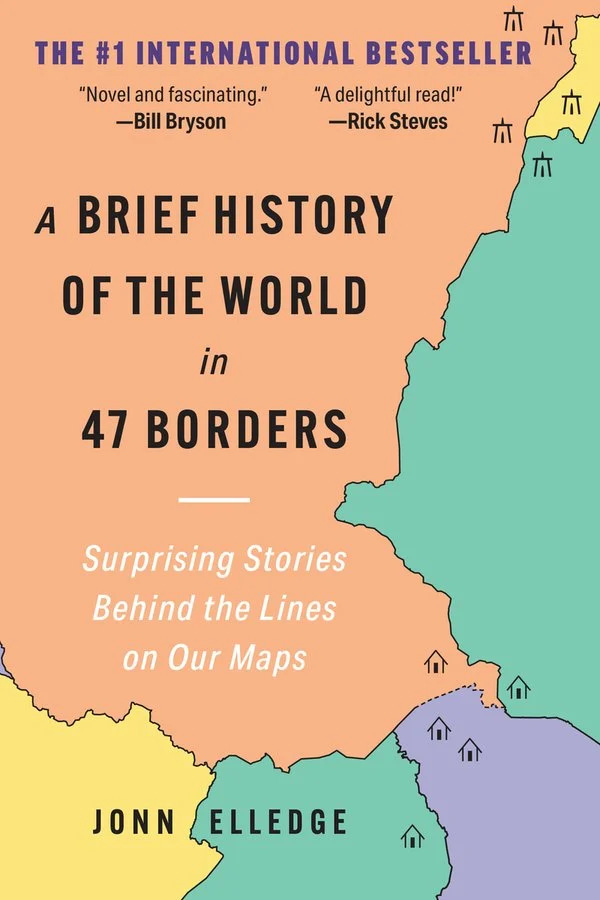
Yet another read this month was inspired by that Book Bingo card: “A book about maps.” I was browsing in a bookstore when English journalist and author Jonn Elledge’s “A Brief History of the World in 47 Borders: Surprising Stories Behind the Lines on Our Maps” all but leapt out at me.
Elledge has a background as a blogger, which comes through here in 47 short chapters, most less than 10 pages long. Don’t be fooled by this brevity; Elledge packs in a ton of context and information. The chapter on Partition, the devastating 1947 imposition of the India-Pakistan border that haunts countless South Asian households to this day, is quite possibly the most lucid explanation of that event I’ve read. Elledge also writes eloquently about border disputes I’d never heard of, such as the one between Egypt and Sudan over Bir Tawal. And he extends the concept of borders past landforms to time and space — I had no idea the Greenwich Prime Meridian had such an interesting backstory.
One more thing about this book: It’s funny. Haggling over territory brings out some of the most infuriating and sad aspects of human nature, and Elledge seizes every opportunity to remark wryly on our follies, not at all sparing his countrymen their role in shaping many of the borders we live with today. If I were suddenly put in charge of teaching a world history class tomorrow, I’d start with this book.
Enjoying Bookworm? Feel free to tip me (tips go to my PayPal).
Happy reading!
Did you review Death Comes to Pemberly? I seem to remember it. I can’t find it through a search. The problem I’m having with it is that while James is a good writer, she isn’t Jane Austen.