Bookworm: May 2026
'The Correspondent,' 'Miss Austen,' 'And Then There Were None,' 'Theo of Golden,' 'London Falling'
This post contains an affiliate link or links. If you use a link to buy a book, I may earn a small commission. You can find all the books that have been featured in this newsletter in my Bookshop store.
The hammock has been strung up. The seats and backs on the backyard director chairs have been replaced. The first batch of local strawberries has been devoured. And the local bookstore’s summer reading bingo card has been picked up and (not to brag, but) two of its squares already filled in. While it’s not meteorologically summer yet, it is most definitely Reading Outdoors Season around these parts. What are you planning to read this season?
Table of contents
Fiction: “The Correspondent,” by Virginia Evans
Fiction: “Miss Austen,” by Gill Hornby
Mystery: “And Then There Were None,” by Agatha Christie
Graphic memoir: “They Called Us Enemy,” by George Takei
True crime: “London Falling,” by Patrick Radden Keefe
“The Correspondent”
Dear Sybil Van Antwerp,
I made your acquaintance through Virginia Evans’ debut novel, “The Correspondent.” The book, as you may or may not know, consists of your letters and emails: to your brother, Felix; to your best friend, Rosalie; to authors you admire, such as Joan Didion and Ann Patchett (who blurbed “The Correspondent,” by the way); to your neighbor Theodore; and to many others. There are also letters and emails to you. Then there is a letter that you have been writing for a very long time but never sent, to someone whose identity remains a mystery until nearly the end.
Why, you may ask, would anyone care about your correspondence? Never mind the audacity of publishing what was clearly PRIVATE (to mimic the capital letters you like to use). I can just see you drawing yourself up to your full 5-foot-1 height in righteous indignation. Perhaps, and this is just my two cents, Virginia Evans felt that we could all learn something from the story of a 70-something woman, seemingly set in her ways and views after years of retired and divorced solitude, whose letters and emails bring new ideas, perspectives and relationships into her life.
I have to be honest, Sybil. I didn’t particularly like you when I started the book. Sometimes that’s been enough to make me put down a book for good. But here I thought: She may be one of the most likable unlikable characters I’ve come across. I’ve known real people like that. So I kept on.
Evans has a playwright’s touch for forming characters through dialogue alone — because that’s what letters and emails are, dialogue. As you reach out to your family and friends, and they reach back, we learn so much about you and them. Just as importantly, you learn. And you change. You show us that it’s never too late to change and grow.
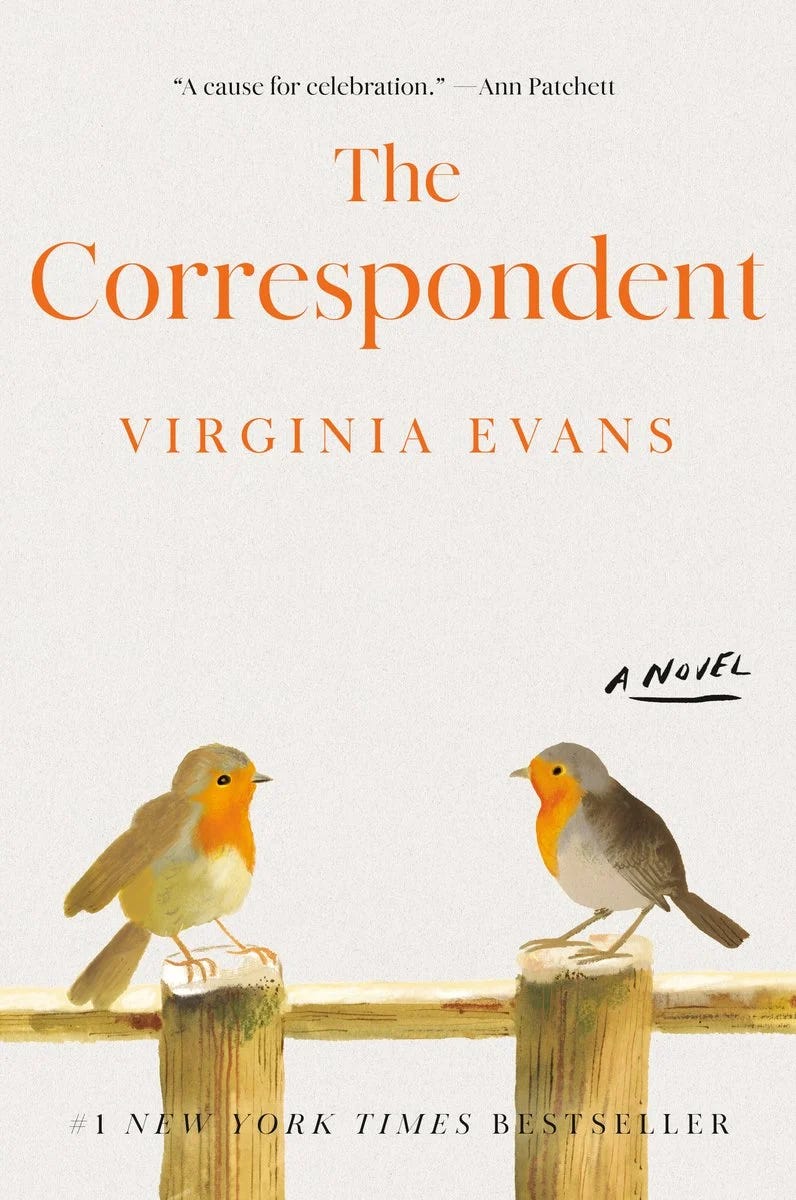
The cover of “The Correspondent” shows two birds on a fence, each atop its own post. I wondered about that, Sybil, even though I know you likely had nothing to do with the cover. What could two birds on a fence have to do with you and your correspondence? But after some thought, I decided that the birds are us. We each fly around in pursuit of our dreams and goals and responsibilities, sometimes in a flock, sometimes on our own. And the fence is our connection: a letter, an email, a call, whatever. We can rest there for as little or as long as we like before we take off again. But the fence is always there, waiting for us to come back.
Thanks, Sybil, for sharing your life with us.
“Miss Austen”
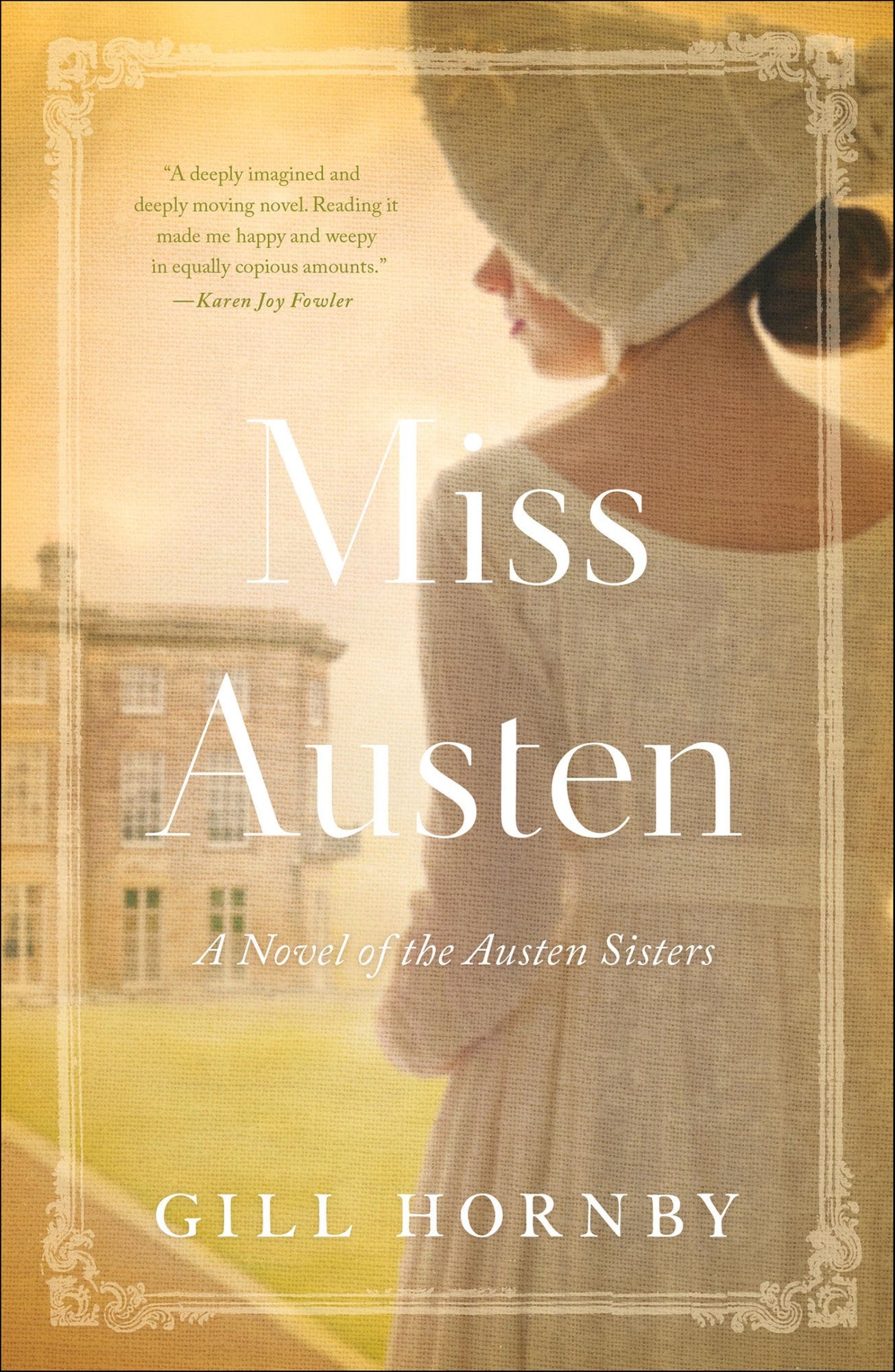
Though my official Year of Jane Austen reading project is long over, as a committed Janeite (Austenite?) I continue to explore her world. Which explains how I came to listen to the audiobook of English novelist Gill Hornby’s “Miss Austen: A Novel of the Austen Sisters.” It tells the story of Austen’s devoted sister Cassandra Austen, who famously, after a foray into romance that ended tragically, forswore all men and made Jane the center of her life forever after. Most famously, in an apparent effort to protect Jane’s reputation, Cassandra destroyed most of her sister’s letters.
This was actually my second go at “Miss Austen.” I found it on a library shelf a couple of years ago, started to read it and quickly gave up. Something about it just didn’t speak to me. Then a new acquaintance recommended the English narrator and actress Juliet Stevenson as the go-to for Austen audiobooks. Browsing Stevenson’s full oeuvre, I found that she’d also narrated “Miss Austen,” and decided to queue it up. That did the trick.
The novel takes place in two timelines. We begin two decades after Jane’s death, when Cassandra is long-established in the role of elderly spinster aunt. The Austens’ longtime friend Isabella Fowle is soon to be evicted from her home, following the death of her vicar father, by the arrival of a new vicar. Cassandra fears the transition will bring to light all the letters Jane wrote to Isabella and hurries to the vicarage to establish herself as a houseguest. Hornby imagines Cassandra finding those lost letters, reading them and recalling her youth — which sets up the second timeline, featuring a vibrant and passionate Cassie. We also see Jane from a fresh perspective, as a supporting rather than main character. Hornby has fun with this — at one point, I actually caught myself mentally scolding Jane for an extended moment of whinging amid her share of privilege.
In the end, Cassandra admits to no regrets about the choices she’s made but does pay forward a bit of what she’s learned from reflecting on her past, providing a satisfying character arc.
Hornby’s imaginative plumbing of the depths of the Austen sisters’ relationship is accompanied by an equally inspired exploration of women’s status and roles, particularly as they age. This she does with empathy, nuance and humor, all of which Stevenson brings to life splendidly.
“And Then There Were None”
In this my Year of Reading Agatha Christie, I’ve been surprised by how many of her books I think I know, but haven’t actually read. Such was the case with “And Then There Were None.” I knew that the book existed, that it originally had the problematic title of “Ten Little Indians,” even what it was generally about, but as I began reading it, I realized this was my first actual encounter with it.
To sum up: Eight people, strangers to one another, all receive invitations for a vacation at a private estate on an island. Each invitation is calibrated perfectly to induce the recipient to accept. The guests arrive to find only two other people, a pair of married estate staff, on the island. Then they realize they’re marooned: There’s no way of returning to the mainland or communicating with anyone there.
One by one, the 10 of them begin dying. Or rather: One by one, they begin to be killed off. Suspicion, fear, hostility and anger ratchet up with each death, until the survivors are little more than a seething mass of paranoia.
Christie, who’s so adept at the locked-room trope she might as well have invented it, here turns an entire island into a locked room, to great effect. Chilling and creepy, “And Then There Were None” is a great escape.
“They Called Us Enemy”
As the child of a librarian, I’ve always appreciated libraries as a community space. Spend enough time in almost any library, and you’ll see how it serves as much more than a repository of books.
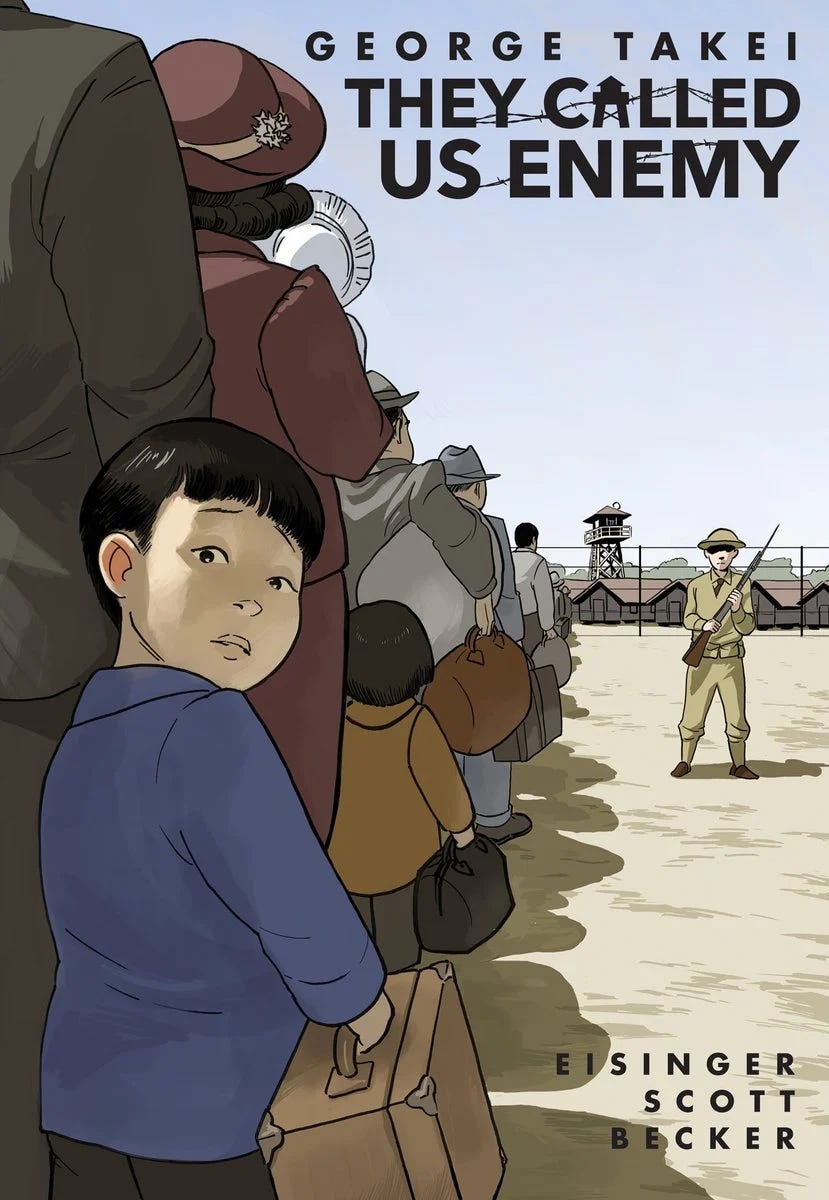
Skye Patrick, director of Los Angeles County Public Library, has taken that concept of community to the next level with this year’s “One Book, One Coast” initiative. More than 140 libraries in California, Oregon and Washington signed on to encourage their communities to read actor, writer and activist George Takei’s 2019 graphic memoir, “They Called Us Enemy.” As you may know, Takei was just 4 years old when his family of five was caught up in anti-Japanese hysteria during World War II, ending up evicted from their Los Angeles home and sent to incarceration camps in Arkansas and California.
I’ve read numerous accounts of the Japanese American incarceration experience, but still learned much from Takei’s memoir, which was only the second one I’ve read from a child’s perspective. He is scheduled to join Patrick and Long Beach Public Library director Cathy De Leon at 2 p.m. Pacific time today (May 31) for a conversation slated to be livestreamed. Here’s hoping for a robust discussion of the questions that the book raises, as summarized by the bookseller Bookshop.org: “What does it mean to be American? Who gets to decide? When the world is against you, what can one person do?”
“London Falling: A Mysterious Death in a Gilded City and a Family’s Search for Truth”
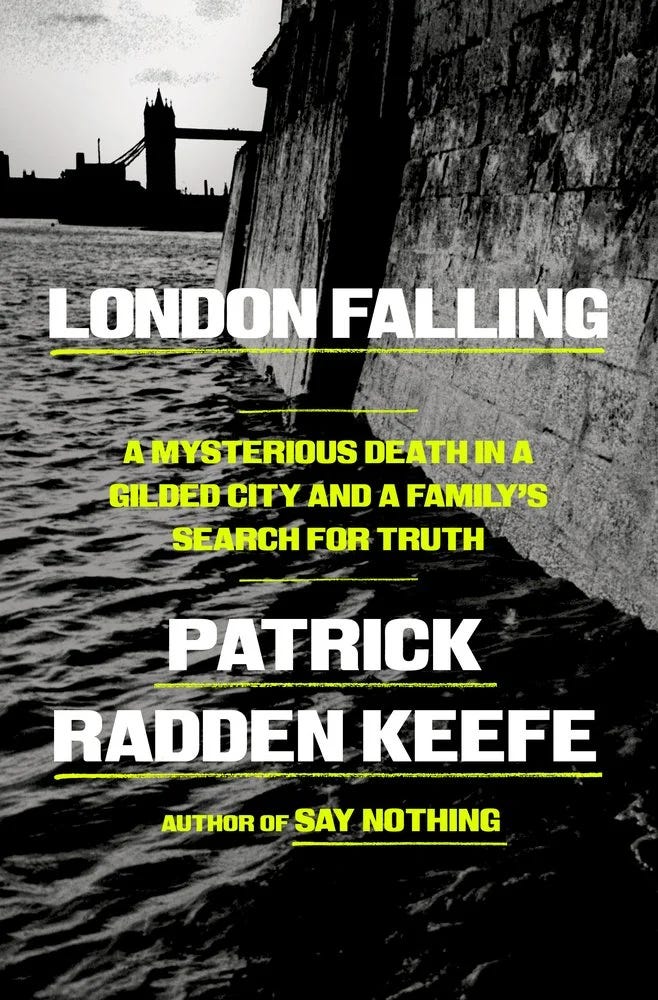
OK, I admit that when a friend mentioned attending a lecture by New Yorker writer Patrick Radden Keefe, I didn’t know who he was. I haven’t read the magazine regularly in years. But she reported back glowingly on his talk, and then I spotted his book on the library’s “Lucky Day” shelf. I’m glad I grabbed it.
Thanks to my father’s personal library, in which 19th-century English authors were disproportionately represented, I grew up with a case of Anglophilia and a mental image of London as Charles Dickens and his peers knew it. “London Falling: A Mysterious Death in a Gilded City and a Family’s Search for Truth” made me rethink all my assumptions and perceptions of that world.
The mystery, and tragedy, at the center of the book starts out simply enough. In the waning days of 2019, a 19-year-old named Zac Brettler plunges from an apartment balcony into the Thames River, where he drowns, washing up a few days later. A security camera video shows he was alone on the balcony. An unfortunate suicide, it seems.
Except Zac’s parents don’t believe he killed himself. He wasn’t depressed, was making plans, had friends. They concede that he’s changed over the past couple of years, but not in a way that’s estranged them. They begin investigating, trying to understand what really happened.
And they discover that Zac was leading a double life. Completely unbeknownst to his family, Zac was swanning around with London’s jet set, passing himself off as the billionaire son of a Russian oligarch and getting away with it. That balcony he jumped from? It was at one of the poshest residential towers in London. This opens the door for Keefe to explain how London has evolved from a grimy manufacturing and shipping capital to a gleaming financial center that’s attracted some of the world’s richest people. And they bring with them the corruption and carelessness that all too often accompanies extreme wealth; Keefe describes 21st-century London as “a twenty-four-hour laundromat for dirty money” and a "service sector for global plutocrats."
It’s a fascinating tale of two cities. It’s also, unexpectedly, a deep dive into parenting, as Zac’s parents — and, ironically, his two closest, old-enough-to-be-his-father associates — learn how much they did not know him.
Enjoying Bookworm? Feel free to tip me (tips go to my PayPal).
Happy reading!