Bookworm: June 2026
'Yesteryear,' 'Immaculate Conception, 'The Astral Library,' 'The Stand-In,' 'Lin-Manuel Miranda: The Education of an Artist'
This post contains an affiliate link or links. If you use a link to buy a book, I may earn a small commission. You can find all the books that have been featured in this newsletter in my Bookshop store.
Happy summer! Or, in my world, Hot Bookworm Summer.
This past weekend my husband and I attended a choral concert where one soloist, a soprano, made me think of the singer in “Jacob Have I Loved,” Katherine Paterson’s Newbery Medal-winning novel. Paterson’s story of a painful relationship between twin teenage sisters, one confident she is destined to become a star soprano and the other desperately searching for her identity, was among my favorite titles during my own adolescence. I probably read it multiple times over multiple summers. Listening to the soprano’s clear voice, I thought, I’d like to re-read that book.
After the concert, we drove to a nearby town for lunch, then strolled around. We came across a used bookstore, and of course I had to go in. I asked if they had any Agatha Christie, but the lone book they produced was one I’d already read. Remembering “Jacob Have I Loved,” I wandered over to the children’s section.
And there it was, on the top shelf.
It was every bit as good as when I’d read it as a child, all those summers ago.
Table of contents
Fiction: “Yesteryear,” by Caro Claire Burke
Fiction: “Immaculate Conception,” by Ling Ling Huang
Fantasy: “The Astral Library,” by Kate Quinn
Romance: “The Stand-In,” by Lily Chu
Biography: “Lin-Manuel Miranda: The Education of an Artist,” by Daniel Pollack-Pelzner
“Yesteryear”
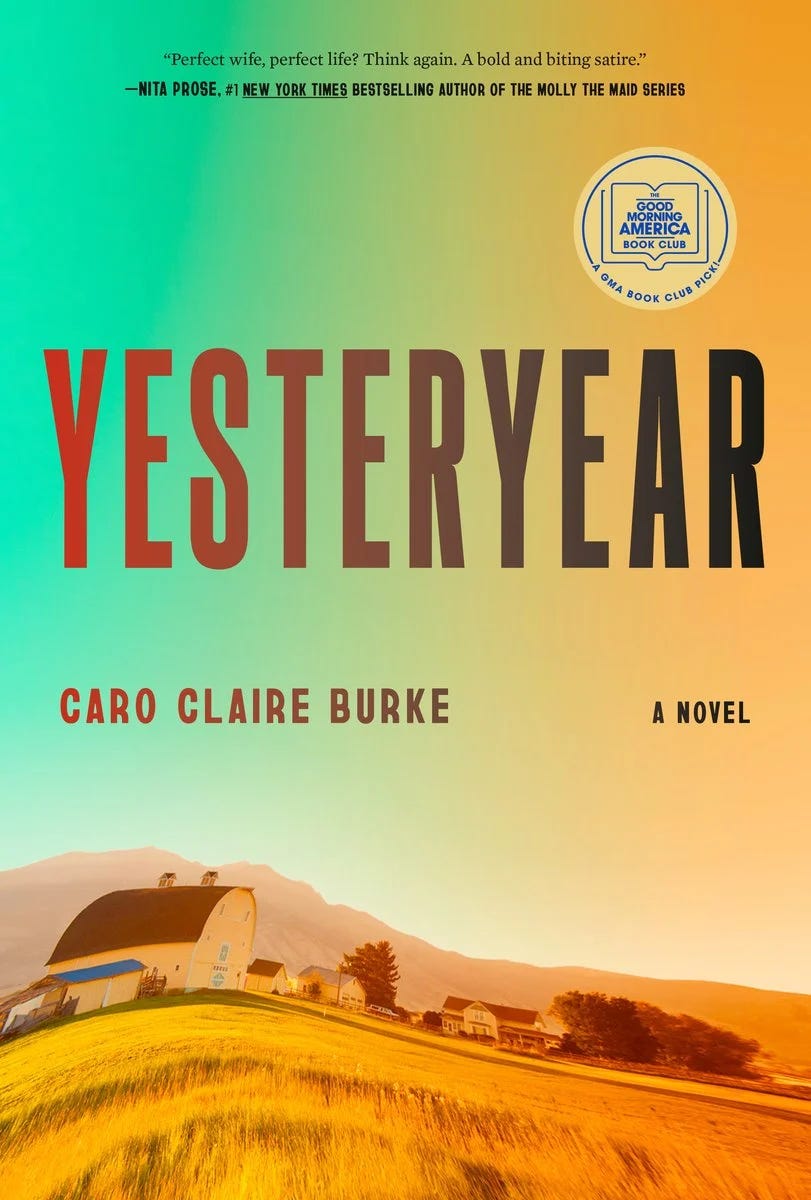
If you spend any time in the world of book coverage, you’re probably sick of reading and hearing about “Yesteryear,” the debut novel by Caro Claire Burke that was snatched up for a film adaptation starring Anne Hathaway before the book was even published in April.
I confess I was not immune to the hype. My book club was going to take June off until I pitched “Yesteryear.” Its story about a 21st-century “tradwife” influencer, Natalie, who wakes up one morning to find herself in the 1850s, seemed as if it had been crafted specifically for, shall we say, robust discussion.
Burke told Vogue that when she sold the book in 2024, “there were people who thought we needed to rush it out the door because it wasn’t going to be relevant by now.” Well, the relevancy train has not left the station at all; in fact, it seems to be boarding more people. Here’s Burke again:
Clearly, there’s something about liberal feminism, or the way that women have to appear in the world right now, that’s really unappealing. Otherwise, this other option would not be so appealing. It was important for me to highlight that there are bad options no matter what.
I found “Yesteryear” a particularly interesting read on the heels of another of our book club titles, “The Book Club for Troublesome Women” by Marie Bostwick, which follows a group of 1960s homemakers as they bond over a new book called “The Feminine Mystique” by someone named Betty Friedan. Alas, we got too caught up in discussing Natalie’s strong resemblance to a real influencer, Hannah Neeleman of Ballerina Farm, to follow that particular thread, but isn’t it telling that both books came out within a year of each other.
“Immaculate Conception”
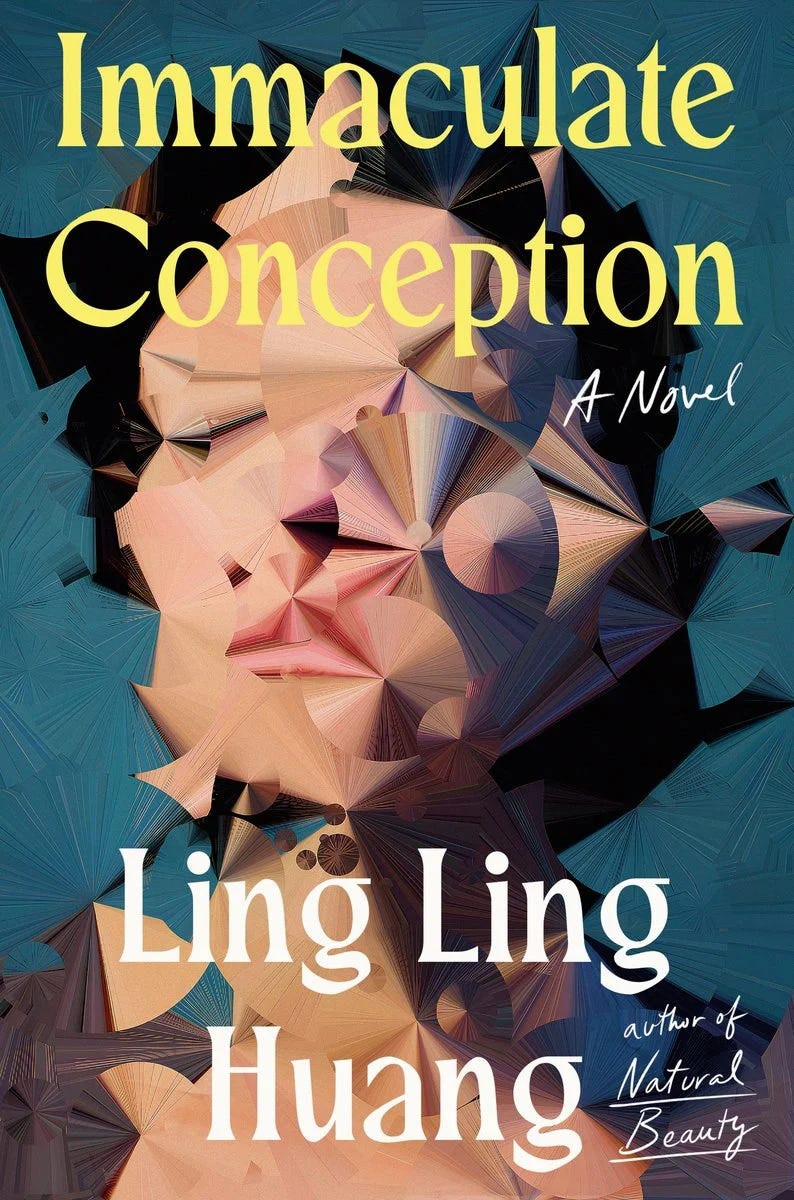
The dedication of Ling Ling Huang’s second novel, “Immaculate Conception,” is the perfect foreshadowing: “For the jealous.”
Which is to say, all of us, right? Who among us hasn’t supped at the green-eyed monster’s table? But there are those who allow themselves just a nibble or two and there are those who feast ravenously.
Huang’s protagonist, Enka Yui, is among the ravenous. A kid from the wrong side of the buffers that divide a near-future America, she manages to land a fellowship spot at a prestigious art school and starts an intimate friendship with a gifted classmate, Mathilde Wojnot-Cho. But it’s not enough for Enka to merely enjoy her proximity to Mathilde’s meteoric rise as a performance artist. In Enka’s eyes, her friend’s success only throws her own artistic limits into sharper relief.
Then Enka meets the handsome, brilliant son of the zillionaire who is funding her fellowship. He falls for her, they marry, and suddenly she has access to seemingly unlimited money and resources — including a technology her husband is developing that allows one person to inhabit another’s mind.
“Immaculate Conception” isn’t so much thought-provoking as thought-pummeling. There’s almost too much happening in this book. Take this scene from a party:
I lose him for a moment, my view blocked by the long necks of a ballet company that has genetically crossed themselves with swans. Their movements are beautiful and graceful, albeit punctuated by the occasional squawk.
In another book, we might follow the ballet company, diving into a brave new world of interspeciation. But here, it’s just a scene from a party, a quick joke before we get back to the real themes of obsessive friendship, the tension between art and technology, and class privilege. Huang juggles them expertly, adding a healthy dose of body horror and a late-breaking, heartbreaking twist before ending on an unexpected note of hope.
“The Astral Library”
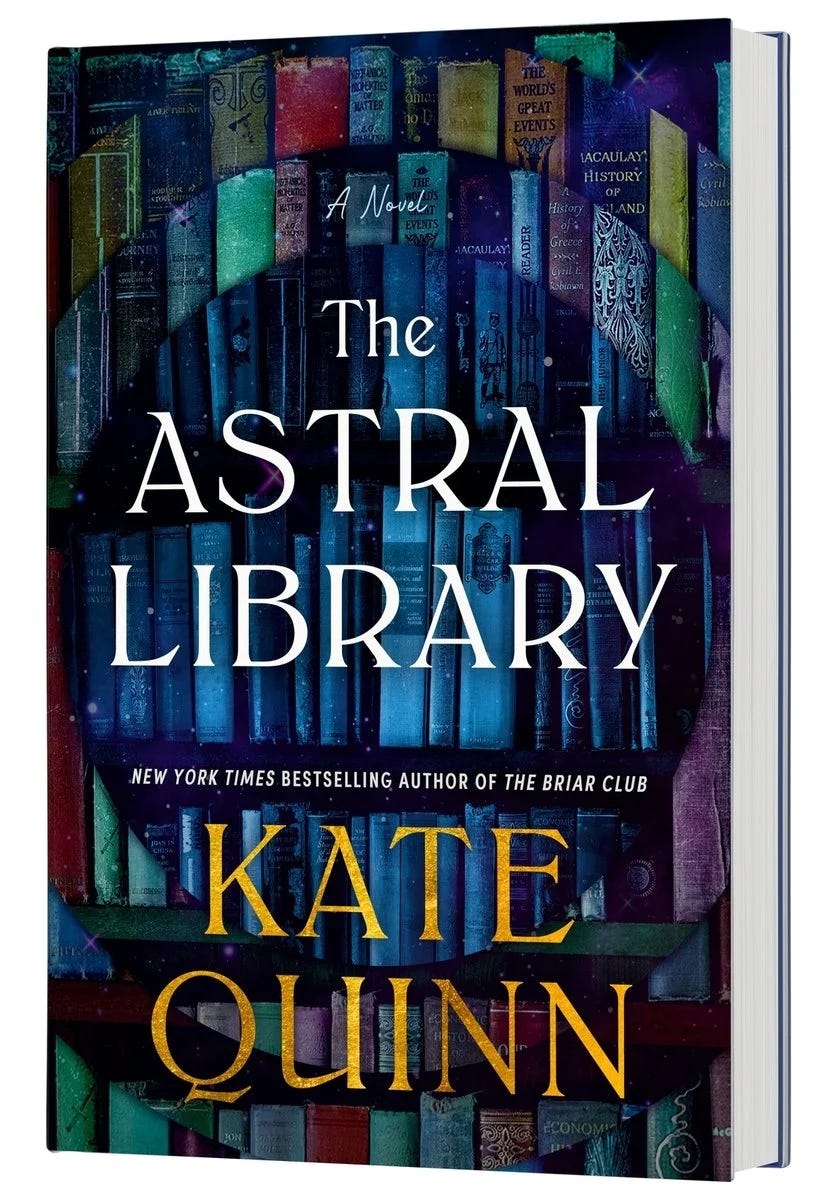
Another recommendation from a friend, another page-turner. In “The Astral Library,” Kate Quinn blends literary history with magical realism to create an alternate world where book lovers can literally escape problematic lives.
Twenty-six-year-old Alix stumbles upon the Astral Library after an abysmal day: She’s fired, evicted and bankrupted in a single afternoon. Overwhelmed, she goes to her favorite public library branch to try to reset — and finds herself stepping through a door into a totally different library.
It turns out that when reality becomes too much for some people to bear, the Astral Library plucks them out of it and gives them sanctuary inside a book of their choice, casting them as a background character. Say you’re a tween girl whose father’s notion of discipline has left bruises on your body. The Astral Library can whisk you off to “Anne of Green Gables,” where you can live henceforth as one of the girls with whom Anne and her best friend, Diana, have picnics and play games.
Alix is thrilled to have been chosen by the Astral Library. But her experience doesn’t seem to be going quite the way it should. Instead of relaxing into a life free of customer service and couch surfing, she’s suddenly on a quest to save the library. This gives Quinn the creative license to whisk Alix and us in and out of a series of classic books, in a very fun way — and to highlight the need for a place where everyone’s story matters, in a very serious way.
“The Stand-In”
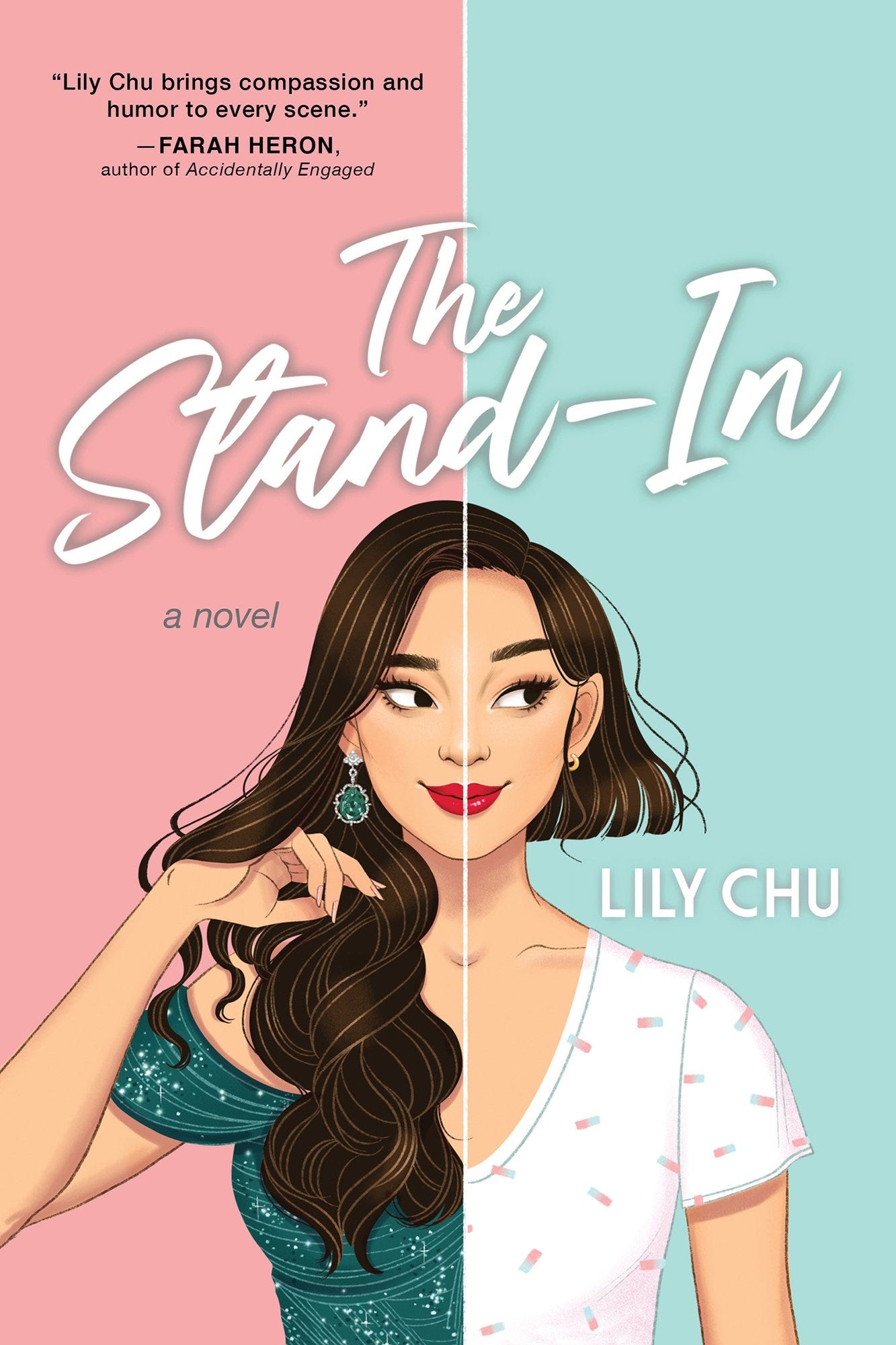
I stumbled across “The Stand-In,” by Canadian author Lily Chu, while browsing the library shelves for something fun and light. Chu definitely delivered with this rom-com that’s like a mashup of “Crazy Rich Asians” and “Cinderella,” set in Toronto.
Gracie is our down-on-her-luck heroine, newly fired and nearly alone in the world — Dad passed away years ago and Mom is in a nursing home with dementia — when a fairy godmother suddenly drops into her life. Wei Fangli, an A-list film actress, has spotted her and realized that she and Gracie look uncannily alike. Their resemblance gives Fangli an idea: She’ll pay Gracie, lavishly, to be her stand-in at selected events to keep her calendar under control.
Gracie sure could use the money, especially as she wants to move her mother to a nicer home. But she sure doesn’t like Sam, Fangli’s co-star and close friend, who hates the stand-in idea and tries to talk both women out of it. And if Gracie accepts Fangli’s offer, Sam will be her regular escort. What to do?
Thankfully for us readers, Gracie says yes. It doesn’t take her long to get used to her new lifestyle. And it doesn’t hurt that Sam is super easy on the eyes or that, having accepted the hoax, he works hard to help her carry it out.
Chu carries off this romance with panache, also writing Gracie a fun secondary arc in which she gets to finally scratch a longtime entrepreneurial itch. (We know Sam is the one for her when he immediately understands the problem she wants to solve and nerds out with her over it.) I enjoyed this book a lot more than I expected: random library browsing for the win.
“Lin-Manuel Miranda: The Education of An Artist”
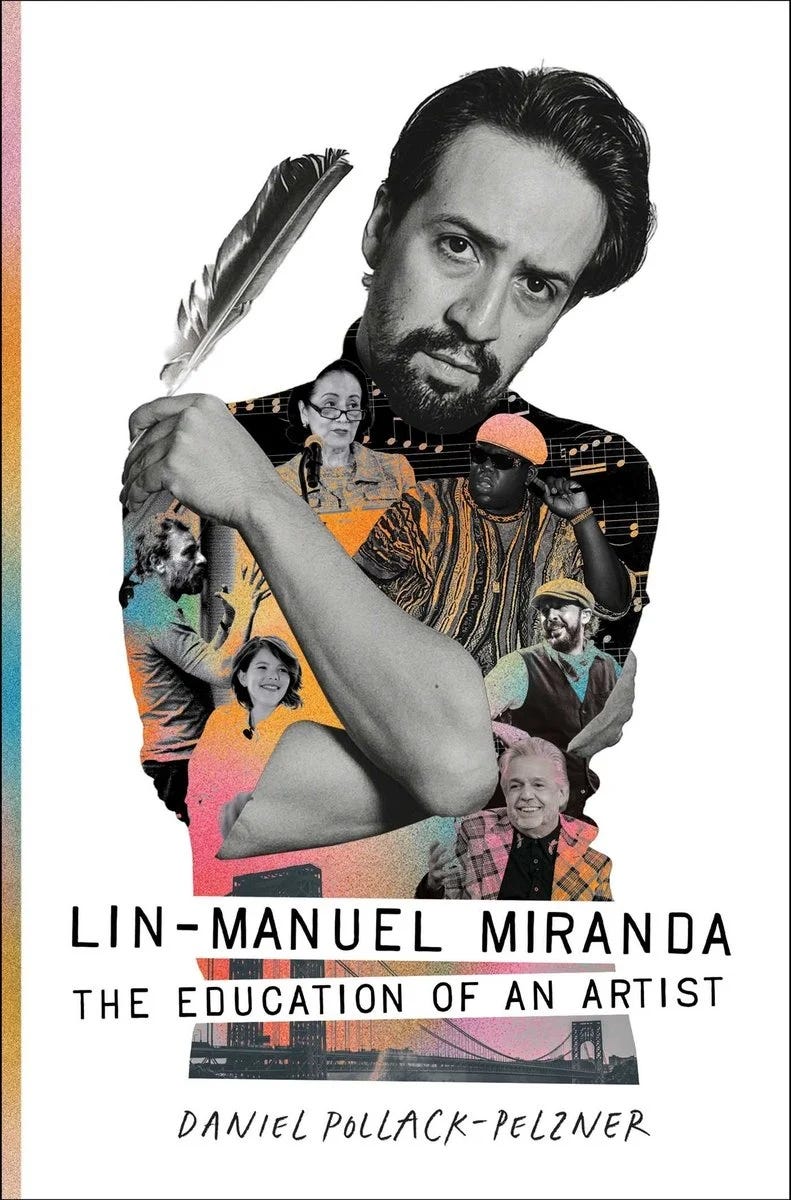
I first became aware of Lin-Manuel Miranda while sitting at a middle school performance a decade ago, listening to a group of tweens singing “My Shot.” What was that song, I wondered. The kids seemed more engaged with it than with anything else they’d sung so far.
While it seemed to me then that Miranda had shot to fame out of nowhere, of course that couldn’t have been further from the facts. Cultural historian and theater critic Daniel Pollack-Pelzner’s biography, “Lin-Manuel Miranda: The Education of an Artist,” meticulously traces Miranda’s life and career, maps the village that raised him, and gives context to his prodigious output. That famous line about Miranda’s most famous protagonist, “Why do you write like you’re running out of time?” It applies equally well to him, Pollack-Pelzner notes.
This definitive biography also spoke to my inner creative spark. Miranda’s accomplishments in theater, film, television and elsewhere show that part of his success lies in knowing when and where to show up and who to work with — that he found his singular voice in listening to many voices.
Enjoying Bookworm? Feel free to tip me (tips go to my PayPal).
Happy reading!
Love these reviews! I'm listening to YESTERYEAR now. I'll check out the others for my TBR!