Bookworm: January 2026
'Hercule Poirot's Christmas,' 'Taiwan Travelogue,' 'Where Do We Go From Here,' 'The Island of Sea Women,' 'The Scratch of a Pen'
This post contains an affiliate link or links. If you use a link to buy a book, I may earn a small commission. You can find all the books that have been featured in this newsletter in my Bookshop store.
Hello fellow readers, and welcome to the first Bookworm of 2026.
This year I’ve got two reading projects going:
To mark the 50th anniversary of Dame Agatha Christie’s death, I’m diving into her whodunits.
To mark the 250th anniversary (semiquincentennial!) of the signing of the Declaration of Independence, I’m diving into books about the American Revolution.
On to this month’s picks.
Table of contents
Mystery: “Hercule Poirot’s Christmas,” by Agatha Christie
Historical fiction: “Taiwan Travelogue,” by Yang Shuang-zi, translated by Lin King
History: “Where Do We Go From Here,” by Martin Luther King Jr.
Historical fiction: “The Island of Sea Women,” by Lisa See
History: “The Scratch of a Pen: 1763 and the Transformation of North America,” by Colin G. Calloway
“Hercule Poirot’s Christmas”
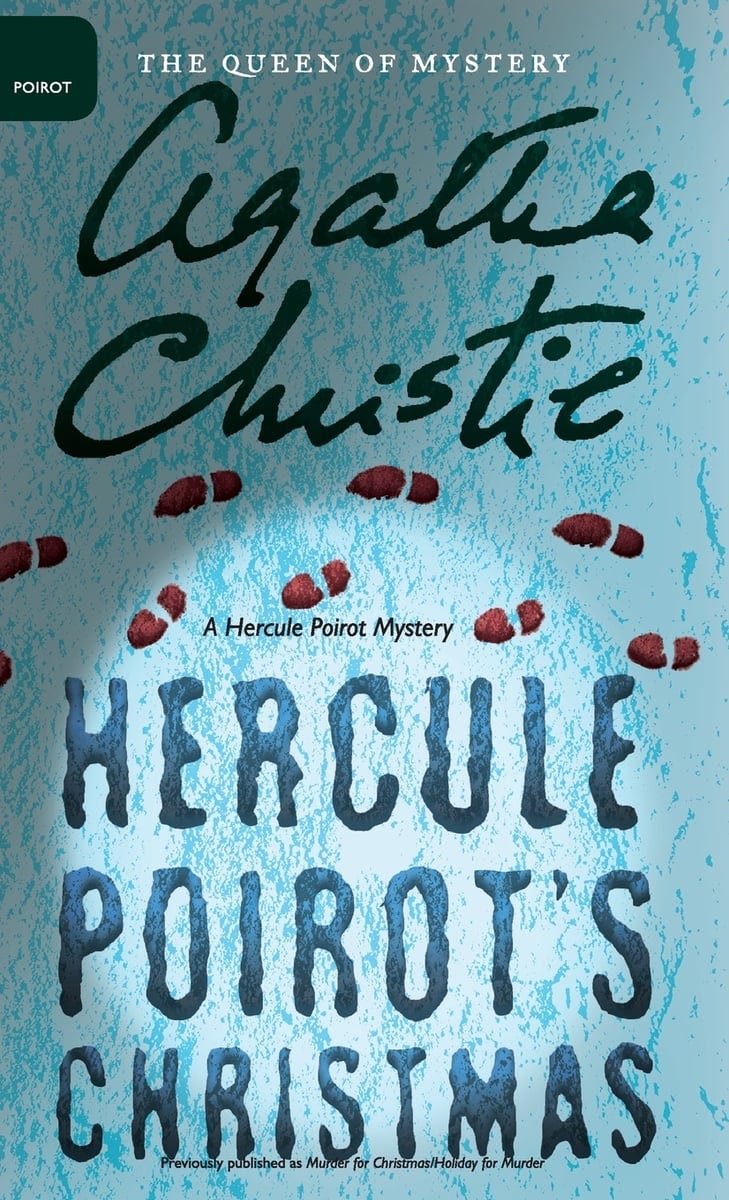
In the spirit of the holidays, and because I received this book as a holiday present, I made this my first Agatha Christie read of 2026. The author makes clever use of several whodunit tropes: a locked-room mystery, a secluded setting, an inheritance at stake, an unsympathetic victim.
Simeon Lee, an elderly and reclusive English millionaire, has ordered his sons and their wives to gather at his estate for Christmas week. They’re surprised to encounter another family member: Lee’s lone grandchild, who was recently orphaned and whom no one has ever met, as her father was Spanish and she grew up in his homeland. Then the doorbell rings: The son of Lee’s friend from his youthful days in South Africa has turned up. He’s promptly invited to stay.
Lee summons this motley crew to his room, making sure they enter as he’s on the phone telling his lawyer he wants to change his will. Then he berates them all, attacking his four sons for not having produced any heirs (the grandchild is his daughter’s child) and sneering that he’s sure he has a troupe of illegitimate sons who are their betters.
Not long afterward, he’s found with his throat cut in his room, and we’re off to analyze motives, opportunities and alibis.
The fun of reading Christie is that she’s so economical with her prose, yet quite efficient at stuffing it full of hints and clues. There are no throwaway lines or observations. Even a butler’s silent critique about how the women are dressed is there for a reason.
I look forward to exploring more of Christie’s 66 crime novels. Which ones would you recommend?
“Taiwan Travelogue”
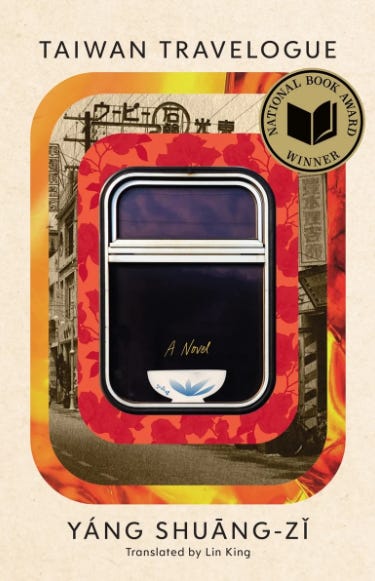
Given my family’s roots, I’m pretty much a sitting duck for any novel about Taiwan. So imagine my delight when Yang Shuang-zi’s novel “Taiwan Travelogue” won the 2024 National Book Award for Translated Literature, making her the first Taiwanese writer to receive this award. (Insert Taiwanese flag emoji here.)
The novel has what its translator, Lin King, calls an “onion” of a premise. It’s presented as the Mandarin Chinese translation of a Japanese novel inspired by the author’s yearlong stay in Taiwan. The “translator” has supplied footnotes; King adds her own. Then there’s an introduction by the translator of a “new” edition of the book, an afterword by the Japanese author, a note by the author’s Taiwanese interpreter, a note by the interpreter’s daughter, a note by the actual author but about the Japanese novel, and a note by the actual interpreter about the actual novel.
Got all that?
The plot is, perhaps by necessity, much simpler. Following a hit film adaptation of her novel, author Aoyama Chizuko is invited to do a lecture tour in Taiwan. It’s 1938; Taiwan has been under Japanese rule for over 40 years but retains much of its distinctive cuisine, which Chizuko is eager to sample. She decides to stay on the island for a year so she can fully indulge.
To her joy, she is assigned a young interpreter who shares her passion for food. Even better, Chizuru is a talented cook who is unflappable in the face of her visitor’s prodigious appetite. The novel’s chapters are titled accordingly: “Silver Needle Vermicelli,” “Braised Minced Pork,” “Winter Melon Tea” and so on.
Before long Chizuko is completely smitten with Chizuru, but the other woman proves a tough nut to crack. She frequently mentions her planned marriage. And she is quick to remind Chizuko that they have an employer-employee relationship and that, to complicate matters further, Chizuko is a colonizer and Chizuru is a subject. Yang explores these power dynamics with gusto, stretching the tension between the two until it hits a breaking point. Not for nothing does Chizuko have what she calls a monster in her stomach, eager to devour every local dish she learns about.
“Where Do We Go From Here”
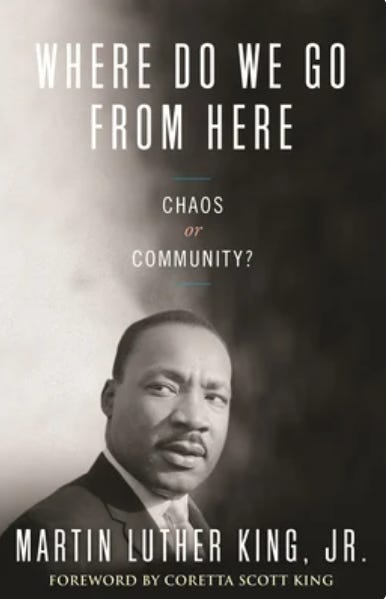
In observance of the Martin Luther King Jr. holiday this year, I picked up his final book, “Where Do We Go From Here: Chaos or Community?” The 1967 book feels prescient, as if King knew it will be his last, and he wanted to pass the baton.
King summarizes the shift in the civil rights movement over the previous two years, starting with the elation at the Aug. 6, 1965, signing of the Voting Rights Act to the rage of the Watts riots less than a week later on Aug. 11, 1965. He recounts the birth of the slogan “Black Power” the following year, and his initial reservations about it:
“Why not use the slogan ‘black consciousness’ or ‘black equality’?” I suggested. “These phrases would be less vulnerable and would more accurately describe what we are about. The words ‘black’ and ‘power’ together give the impression that we are talking about black domination rather than black equality.”
King writes that “Black Power is a cry of disappointment.” He also views it as “a call to black people to amass the political and economic strength to achieve their legitimate goals.”
There is nothing essentially wrong with power. The problem is that in America power is unequally distributed. … [It is the] collision of immoral power with powerless morality which constitutes the major crisis of our times.
I wondered what he would have thought of the slogan and movement “Black Lives Matter.” I wondered what he would have thought of January 2026.
King follows this summary with a discussion of white backlash against the civil rights movement and the challenges the movement has not erased. Then he broadens his scope to discuss economic justice and the goals and values we should pursue as residents of what he calls “the world house.”
We must rapidly begin the shift from a “thing”-oriented society to a “person”-oriented society. When machines and computers, profit motives and property rights are considered more important than people, the giant triplets of racism, materialism and militarism are incapable of being conquered. A civilization can flounder as readily in the face of moral and spiritual bankruptcy as it can through financial bankruptcy.
It’s difficult not to feel that we are floundering still today to find an answer to the question he left for us: Chaos or community?
“The Island of Sea Women”
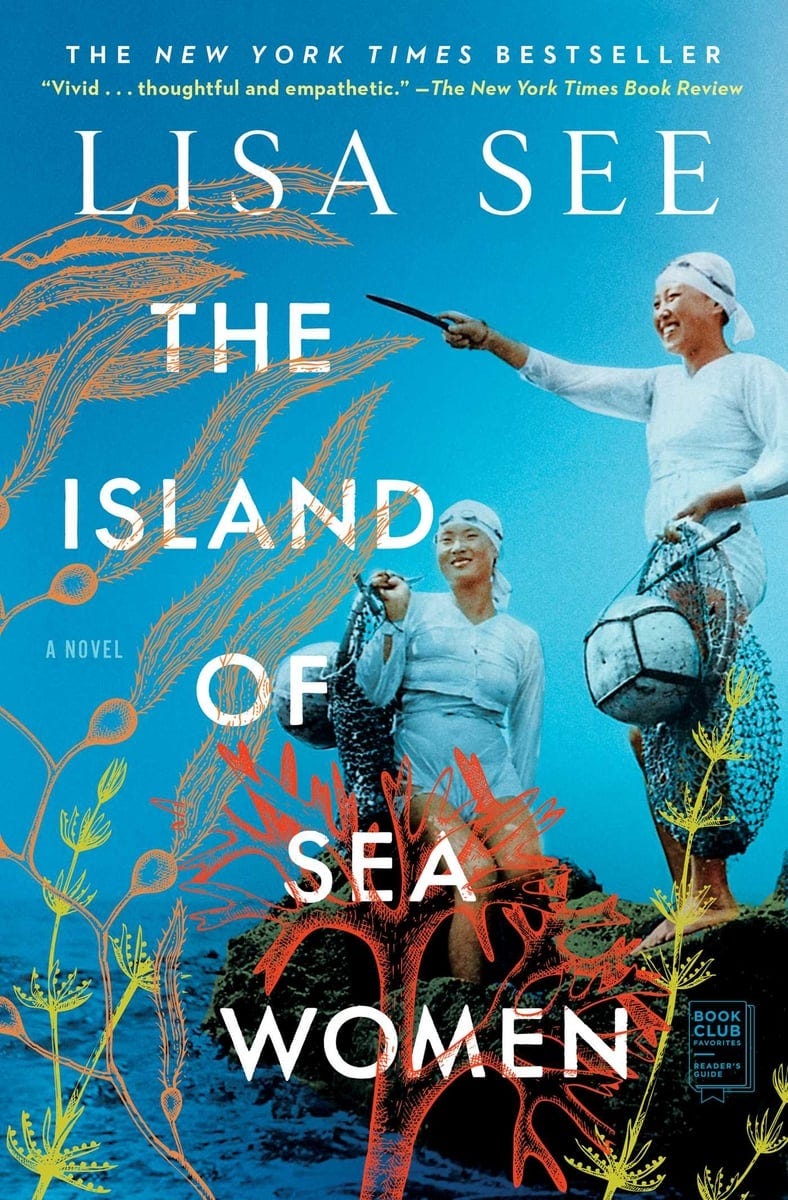
I’ve long been a fan of Lisa See, who’s written numerous works of historical fiction inspired by her Chinese heritage. So I was curious about her 2019 novel, “The Island of Sea Women,” which is set in Korea. I’ve been working on a project recently that’s taught me much about Korean history, so I thought See’s novel might provide more context.
Did it ever. The novel follows the life of Young-sook, born on Korea’s Jeju Island and into a matriarchal community of sea divers. One day, Young-sook knows, she too will learn the ways of diving for abalone, octopus and other ocean creatures that provide physical and economic sustenance for her village. If she’s lucky, she’ll be married to a man who will care for their daughters, the next generation of providers, as well as any sons who happen along.
Then she meets Mi-ja, who’s come to live with her aunt and uncle nearby. They provide only the barest of food and shelter to their niece because she’s stained by her father’s decision to collaborate with Korea’s Japanese occupiers. Young-sook’s mother takes pity on Mi-ja and becomes a surrogate parent to her; the girls become best friends.
Young-sook and Mi-ja endure not only Japanese occupation but also World War II, the Korean War and the terrible upheaval afterward. They, and Jeju Island, survive only with deep scars. See tells their stories in alternate timelines, past and present, when Young-sook is an old woman, comfortably surrounded by children and grandchildren. She’s long broken her ties with Mi-ja when a Korean American family turns up on Jeju, ostensibly as tourists, but really to learn more about their beloved grandmother. Somehow, they’ve figured out that Young-sook was once her friend. And now, through their questions, Young-sook is forced to confront and acknowledge her past.
“The Scratch of a Pen”
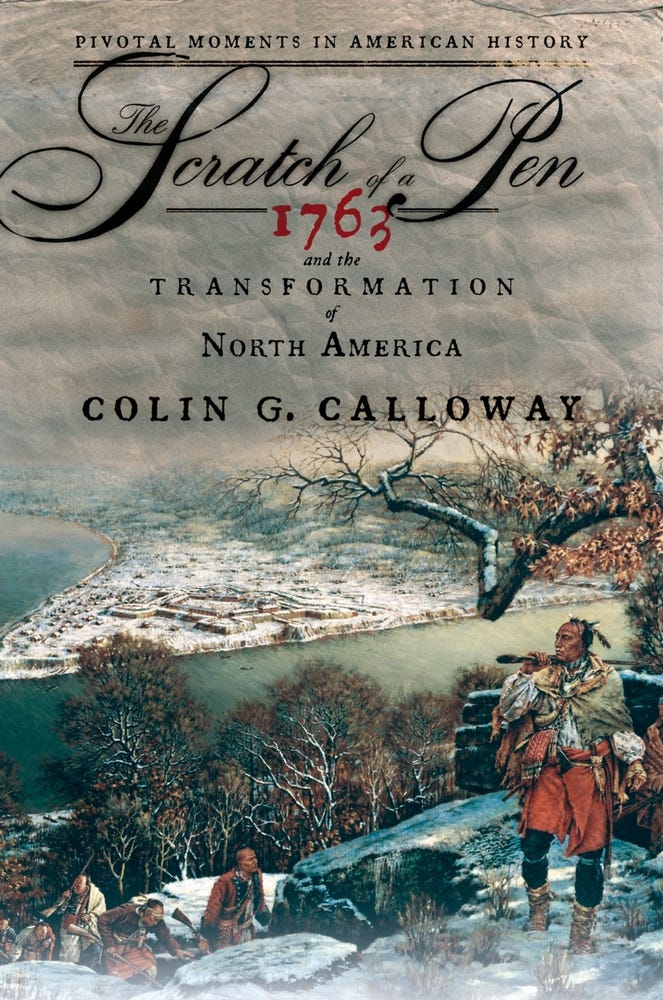
While watching Ken Burns’ “American Revolution” documentary last fall, I wrote down the names of all the historians who appeared, so I could look for their books. Then I thought I might try to read books about the American Revolution in roughly chronological order. This brought me to “The Scratch of a Pen,” by Colin G. Calloway, Dartmouth College’s John Kimball, Jr. 1943 Professor of History and Professor of Native American Studies.
Calloway’s book explains the significance of the 1763 Treaty of Paris in setting the stage for rebellion in the 1770s. If you’re as hazy on your pre-Revolutionary history as I was, this Treaty of Paris (there have been quite a few) ended the war that I grew up learning about as the French and Indian War. It’s more accurately called the Seven Years’ War because the parties involved included not only France and Native Americans but also Britain and Spain.
Calloway illuminates how the signing of the 1763 treaty set in motion a sweeping and complex redistribution of land and people. We tend to focus on the 13 British colonies along the East Coast; Calloway sets alongside them French settlers’ penetration into the interior of the continent, resulting in the early establishments of Montreal, Detroit and St. Louis. His expertise in Native American studies shines through as he details how, rather than being monolithically helpless victims, the Native peoples who interacted with the British, French and Spanish were often equal players in the constantly shifting political dynamics.
I appreciated Burns’ documentary most for placing the Revolution in its proper global context. Calloway’s book does much the same for the war that preceded it.
Enjoying Bookworm? Feel free to tip me (tips go to my PayPal).
Happy reading!
I look forward to seeing Book Worm every month, and this edition does not disappoint! I like that it turns up just once a month, giving me time to digest the books. This month, it’s hard to decide where to begin. Thank you, Amy, for doing the shoe leather work and bringing us great books to read.
I recommend any Agatha Christie mystery set out of England, prefer those starring Hercule Poirot or Miss Marple, to the others, and find her social observations fascinating. And I also enjoyed very much Lisa See's Island of Sea Women although some of the violence described is pretty hard to take.