Bookworm: December 2025
'The Sum of Us,' 'Jane Austen,' 'Ayesha at Last,' 'Boat Baby,' 'Gilead'
This post contains an affiliate link or links. If you use a link to buy a book, I may earn a small commission. You can find all the books that have been featured in this newsletter in my Bookshop store.
Happy New Year’s Eve! It was another excellent year of reading (check out my final 2025 tally at the end of this newsletter.) I hope you found some new and new-to-you authors and books to enjoy, and some new and new-to-you bookstores to support. Meanwhile, I’ve already got a couple of reading projects sketched out for 2026. More to come on those in the January Bookworm.
Table of contents
Nonfiction: “The Sum of Us,” by Heather McGhee
Biography: “Jane Austen,” by Claire Tomalin
Fiction: “Ayesha at Last,” by Uzma Jalaluddin
Memoir: “Boat Baby,” by Vicky Nguyen
Fiction: “Gilead,” by Marilynne Robinson
“The Sum of Us: What Racism Costs Everyone and How We Can Prosper Together”
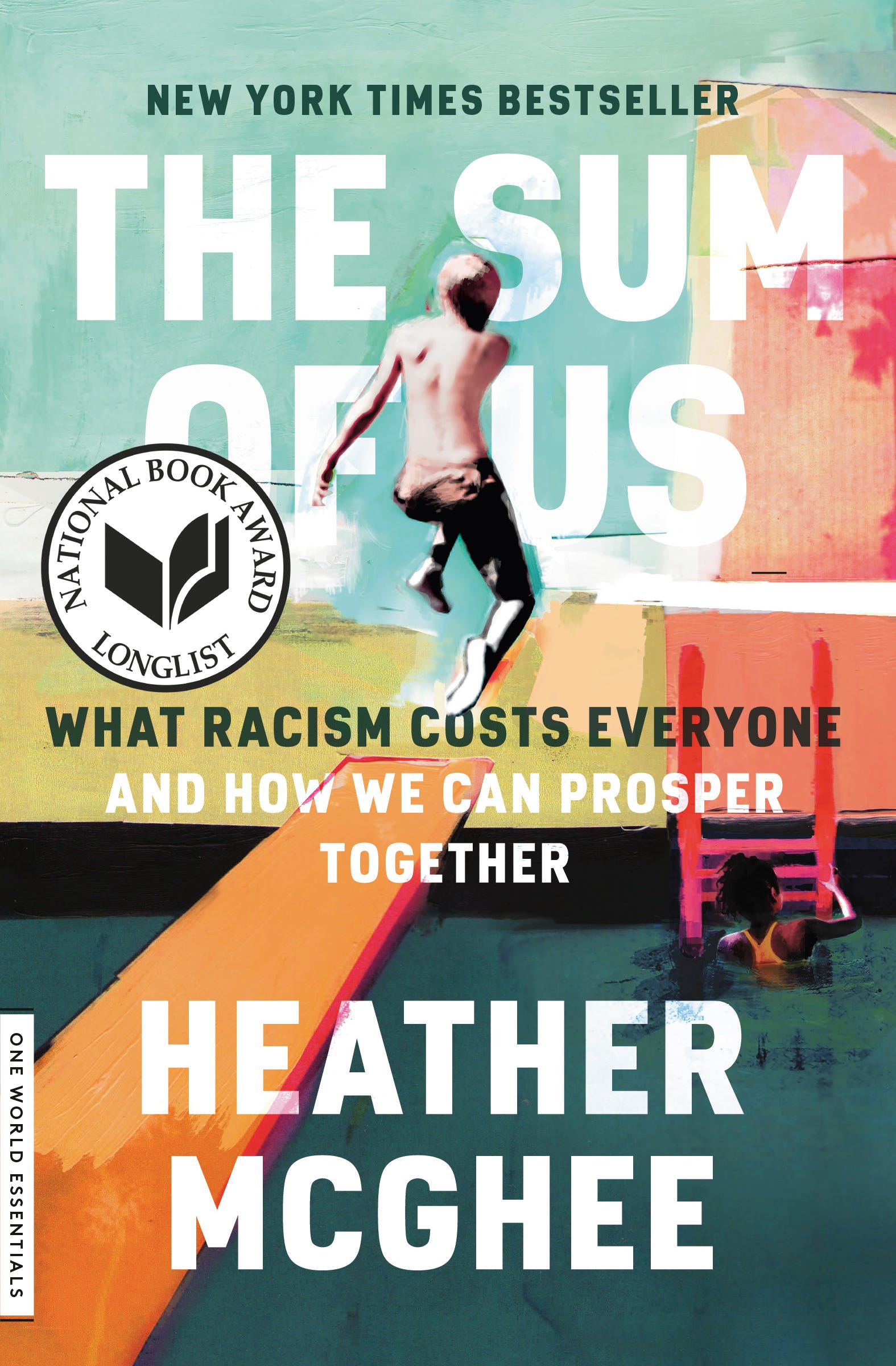
This spring I attended a conference where one of the keynote speakers was a public policy expert named Heather McGhee. I wasn’t familiar with her work, and I suspect many of the other attendees weren’t either, but she drew all of us right in with a simple story.
Public pools in this country used to be segregated, she said. Then cities were told to integrate the pools. Rather than allow Black children to “win” the right to swim with white children, some cities drained and closed their pools instead. (Montgomery, Alabama, went a step further and dismantled its parks department.) And so all the children lost.
McGhee uses this story early on in her 2021 book, “The Sum of Us,” and turns the drained pools into a metaphorical touchstone for the rest of the book. In chapters that examine housing, health care, environmental pollution and more, she argues that Americans approach public policy with a zero-sum mindset — if people of color take one step forward, white people take one step back — that makes losers of all of us.
But there is a way to win: by acknowledging the mindset and choosing to think outside of it. After telling the story of how a multiracial coalition in Maine successfully pushed a ballot initiative to expand Medicaid, she writes that the state experienced what she calls a Solidarity Dividend:
Rejecting the scapegoating politics that enabled a right-wing government to deny healthcare and creating new political alliances between workers of all backgrounds resulted in sixty thousand Mainers winning access to healthcare. These same organizers and volunteers helped elect a wave of new politicians the following year, who passed reforms to address the opioid epidemic and guarantee a generous paid-time-off law for Maine workers.
Elizabeth Gilbert called “The Sum of Us” a “book for every American.” If any librarians are reading this, I have a modest proposal: Consider choosing this book for your next community reading program.
“Jane Austen: A Life”
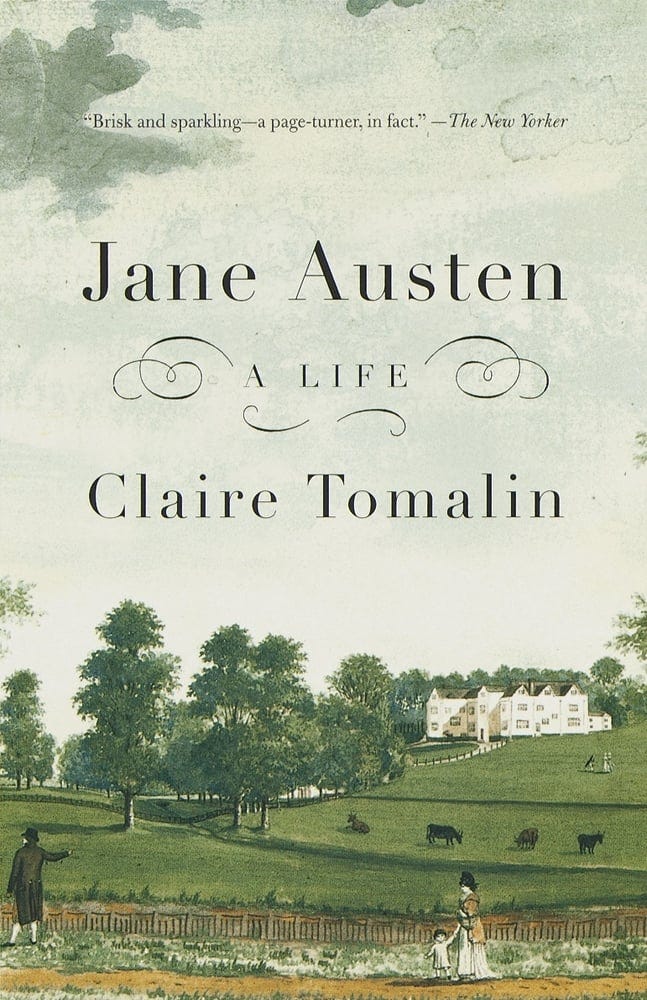
This month, Jane Austen fans — also known as “Janeites” or “Austenauts” — celebrated the English author’s 250th birthday. I’ve been celebrating all year by re-reading the six novels that make up the Austen canon, so when I came across Claire Tomalin’s 1999 biography in a bookstore in November, it felt like fate. Home it came with me.
Tomalin, an award-winning biographer, certainly did her research on Austen. In fact, she delved so deeply into Austen’s life that the author sometimes vanishes for pages at a time as we are regaled instead with details about a brother, sister-in-law, friend or neighbor. “Jane Austen’s World” would have been a more accurate title.
This may be partly due to lack of primary source material. After Austen’s death, many of her letters were burned by her sister and literary executor Cassandra. Other letters met their end at the hands of a niece, a daughter of Austen’s brother Frank:
He preserved Jane’s letters carefully for fifty years, but immediately after his death they were destroyed by his daughter Fanny, who failed to consult with anyone else. An irreparable loss.
One going theory is that Cassandra and Fanny Austen acted out of love, to protect their sister and aunt’s privacy and reputation. Tomalin notes that in the letters and diaries that have survived, Austen was sometimes anything but mindful and demure, which could have been a shock to her fans’ sensibilities. (She did write slyly and sardonically about seduction and greed hidden under a mask of propriety in her early epistolary novella “Lady Susan,” which Tomalin theorizes may have been inspired by the racy 1782 French novel “Les Liaisons Dangereuses.”)
While I thoroughly enjoyed this biography, it seems to take for granted that readers know all of Austen’s novels. Maybe that’s because Tomalin is, like Austen, British. She makes offhand character and plot references throughout and refers readers to the endnotes for the summaries of two novels. It felt like reading a sequel before the original. Still, it’s a worthy read for any Janeite or Austenaut.
“Ayesha at Last”
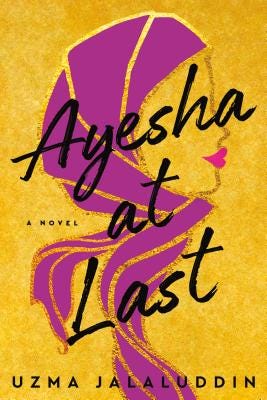
My year of Jane Austen included several retellings of her work, and “Ayesha at Last,” by Canadian novelist and playwright Uzma Jalaluddin, may be my favorite of the ones I read.
Jalaluddin reimagines “Pride and Prejudice” as a modern romance within Toronto’s Muslim community. Ayesha, a 27-year-old substitute teacher, and Khalid, a 26-year-old web developer, are relatively new neighbors who have yet to meet. Unless you count Khalid watching Ayesha through his kitchen window every morning as she dashes out to her car.
Both follow Islamic practice. But Ayesha rebels against some expectations and traditions, especially that of the rishta, or arranged-marriage proposal. Khalid, on the other hand, is waiting dutifully for his mother to find a wife for him and tells himself that love will follow marriage.
Like Elizabeth Bennet, Ayesha willfully misjudges Khalid — she looks no further than his traditional beard and thawb, so out of place in the bar where they first meet. Like Fitzwilliam Darcy, Khalid is swayed by his pride — he will be the perfect Muslim son his mother demands even when everyone else thinks her behavior verges on the fanatical.
Jalaluddin adds a unique twist to her story: Ayesha’s Shakespeare-quoting grandfather, who provides an opportunity for the author to weave in the Shakespearean trope of mistaken identity to excellent effect. Talk about taking a retelling to the next level.
“Boat Baby”
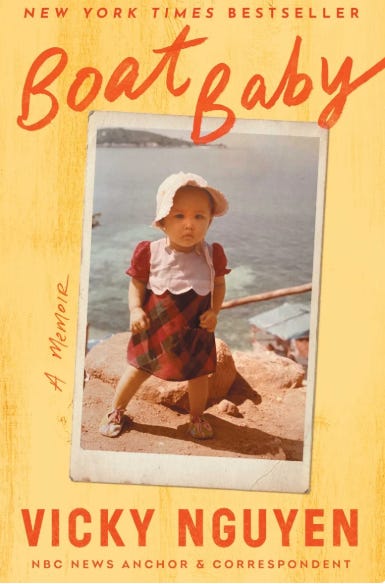
Here’s another book I learned about through a conference, in this case the annual convention of the Asian American Journalists Association. The convention typically features new books by members, and this year NBC News’ Vicky Nguyen was enthusiastically promoting her new memoir.
Nguyen was born in Vietnam several years after the fall of Saigon. She was still an infant when her parents decided to leave the country. The family, including several of Nguyen’s young uncles, walked for days to meet up with a distant relative who owned a boat and was willing to take them to a refugee camp in Malaysia.
Nguyen’s family had one important connection: Her mother worked for Holt, the Oregon-based international adoption agency, and wrote to them for help. After 10 months in the refugee camp, the Nguyens were on their way to the United States.
Nguyen writes candidly about her family’s successes, challenges and tragedies as they chased their American Dream from Eugene, Oregon, to Reno, Nevada, to San Jose and Santa Rosa, California. When she embarked on a television career, she saw still more of the country, working for stations in Florida, Nevada, Arizona and California before hitting the big time at NBC News.
The through line of this memoir is family. Nguyen’s parents left their homeland to give their only child a chance at a better life, and they remain close to her to this day, having followed her to New York when she joined NBC. Nguyen also writes lovingly of her husband, her high school sweetheart, who unhesitatingly accepted that marrying her meant pledging himself to her parents as well. Her story is a heartwarming one of love and resilience.
“Gilead”
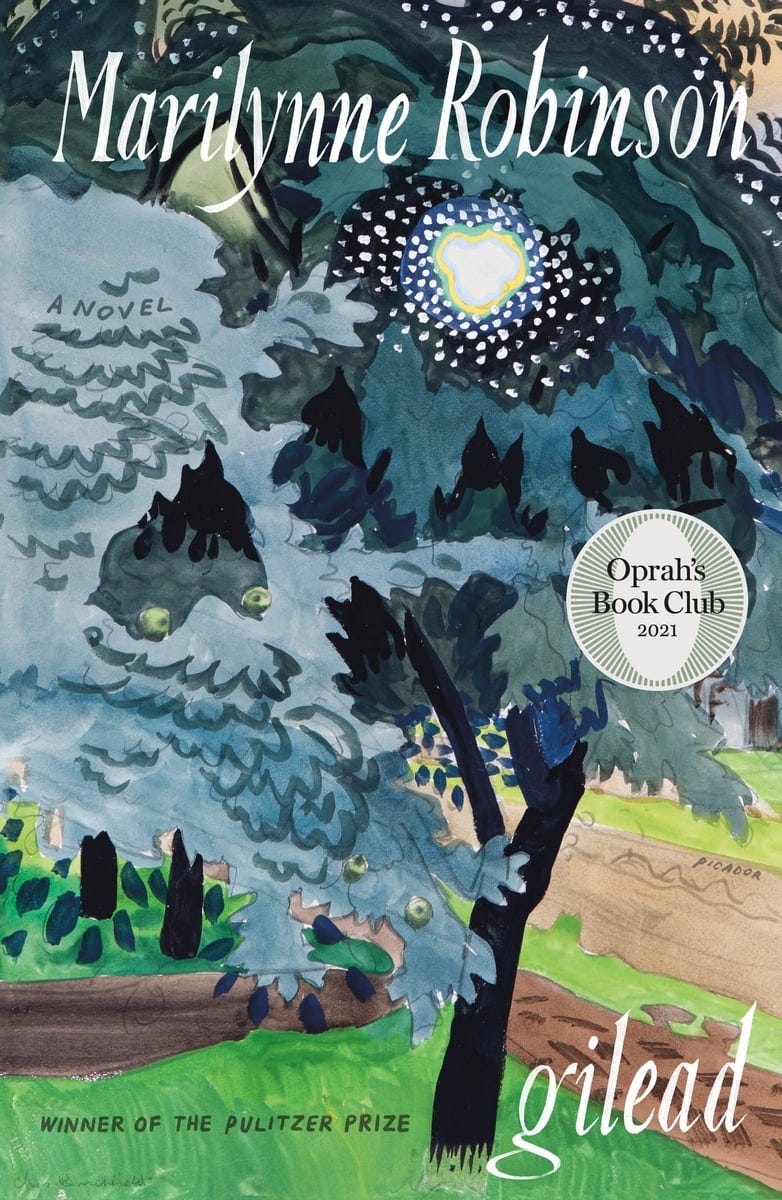
The first in a four-volume series (so far), Marilynne Robinson’s “Gilead” is a quiet, powerful musing on life, family, faith and morality that hit just the right chords for me this holiday season. I first heard of it when President Barack Obama named it one of his favorite books of the year, many years ago, but it’s taken me this long to get to it. That’s all right; to paraphrase author Gabrielle Zevin, sometimes books don't resonate with us until the time is right.
“Gilead” is written from the perspective of the Rev. John Ames, a small-town minister in his 70s who came late to marriage and fatherhood and is now feeling his health fade. His closest friend is a fellow minister who married young and raised eight children. They live in the fictional town of Gilead, Iowa, named for the Biblical town that was a site of both healing and injustice. Robinson adds potent historical context by giving Gilead, and Ames, a past flecked with abolitionist fervor.
The book takes the form of a single long letter from Ames to his small son, written over days and weeks. He muses about the fraught relationship between his grandfather, a Civil War veteran, and his father, a pacifist. He shares his religious insights and introspection. He records moments of domestic joy. And he frets over the abrupt reappearance of his best friend’s best-loved son, Ames’ namesake, after a 20-year absence. When the younger man, known as Jack, starts to befriend Ames’ wife and boy, the tension rises.
Reading “Gilead” was like enjoying a rich and inspiring conversation with a deeply thoughtful and empathetic friend. I’ve already read the sequel, “Home,” which explores Jack’s perspective of the events in “Gilead,” and have the next book on hold at the library.
That’s a wrap: In 2025, I finished 153 books. How’d you do?
Enjoying Bookworm? Feel free to tip me (tips go to my PayPal).
Happy reading!
163 books! Quite an achievement! I, too, was distressed by reading how cities filled their public swimming pools with concrete rather than let Black kids swim in them in “The Sum of Us.” Everyone suffers from racism. I've been putting off reading “Gilead,” too. Maybe now is the time.